

Architect and Generative Designer working at the intersection of mixed media and architecture.
Chantal has worked at various international architectural firms, recently Zaha Hadid Architects, where she has been a Lead Architect since 2018.
Chantal has been teaching at various institutes, such as UCL The Bartlett School of Architecture, Middle East Architecture Lab, Munster University and more since 2020.
She has also participated in international exhibitions such as Galerie Fractal in Paris, the Venice Biennale and recently University of Texas, for machine learning and artificial intelligence symposium and group exhibition.
Some papers, news, projects and interviews
The Architects Designing Surreal Worlds with AI, Bloomberg
Five Inspiring Creators Working In The Immersive Industry, Forbes
Architecture’s future with artificial intelligence, UT Austin
Architecture After AI, The University of Texas at Austin School of Architecture
Let’s Talk NFT’s for Architects with Chantal Matar and Alice Labourel, Architect Network
ABSTRACT ART – AUTUMN SUN Exhibition, The Brik Lane Gallery, London UK
Creative Interview: Chantal Matar / Architect and Visual Artist, Vagon
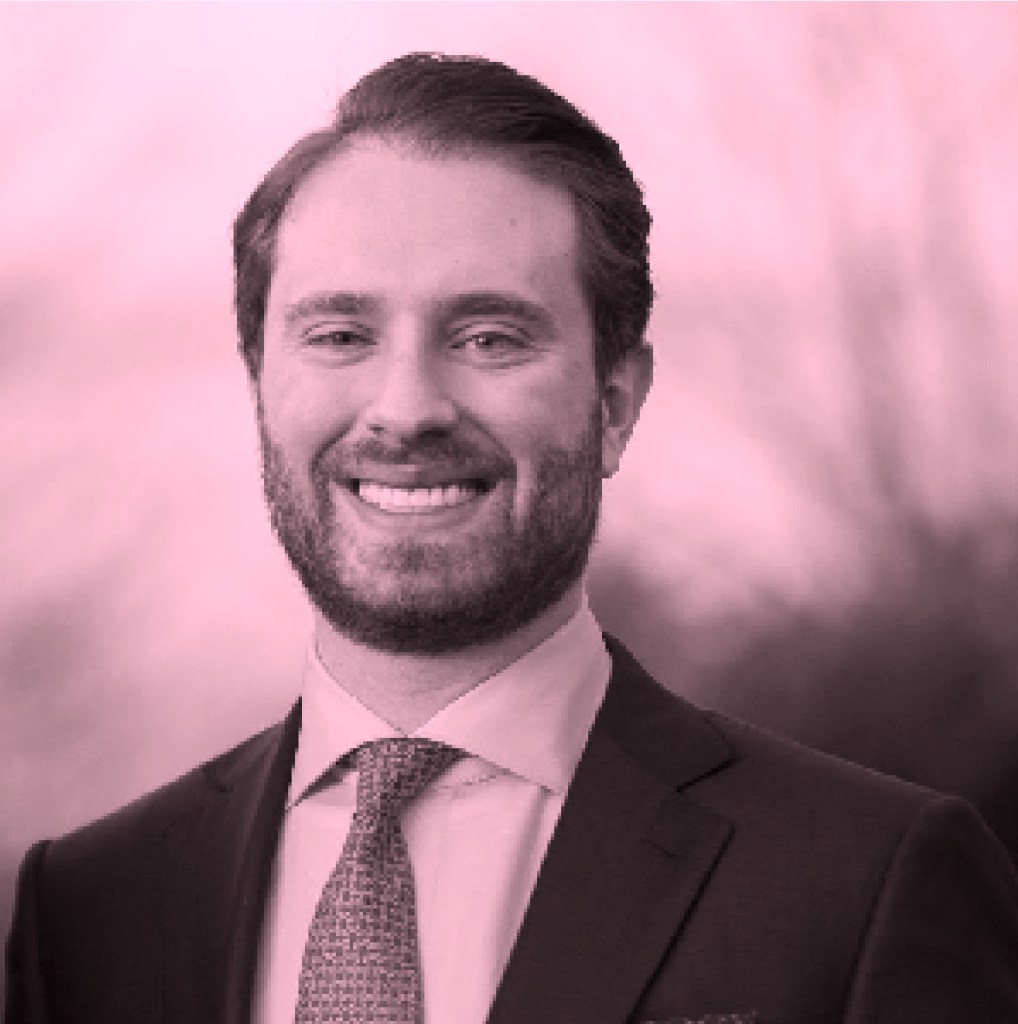
Ryan Abbott, MD, JD, MTOM, PhD, is Professor of Law and Health Sciences at the University of Surrey School of Law, Adjunct Assistant Professor of Medicine at the David Geffen School of Medicine at UCLA, partner at Brown, Neri, Smith & Khan, LLP, and a mediator and arbitrator with JAMS, Inc.
He is the author of “The Reasonable Robot: Artificial Intelligence and the Law” published in 2020 by Cambridge University Press as well as the editor of the Research Handbook on Intellec-tual Property and Artificial Intelligence published in 2022 by Edward Elgar. He has published widely on issues associated with life sciences and intellectual property in leading legal, medical, and scientific books and journals, and his research has been featured prominently in the popu-lar press including in The Times of London, the New York Times, the Financial Times, and other media outlets involving time.
Professor Abbott has worked as an expert for, among others, the United Kingdom Parliament, the European Commission, the World Health Organization, and the World Intellectual Property Organization.
He is a licensed physician and patent attorney in the United States, and a solicitor advocate in England and Wales. Managing Intellectual Property magazine named him as one of the fifty most influential people in intellectual property in 2019 and again in 2021.
Some papers, news, projects and interviews
Monograph: The Reasonable Robot: Artificial Intelligence and the Law (CUP 2020)
Research Handbook: Intellectual Property and Artificial Intelligence (Ryan Abbott ed., 2022)
Select Research on SSRN
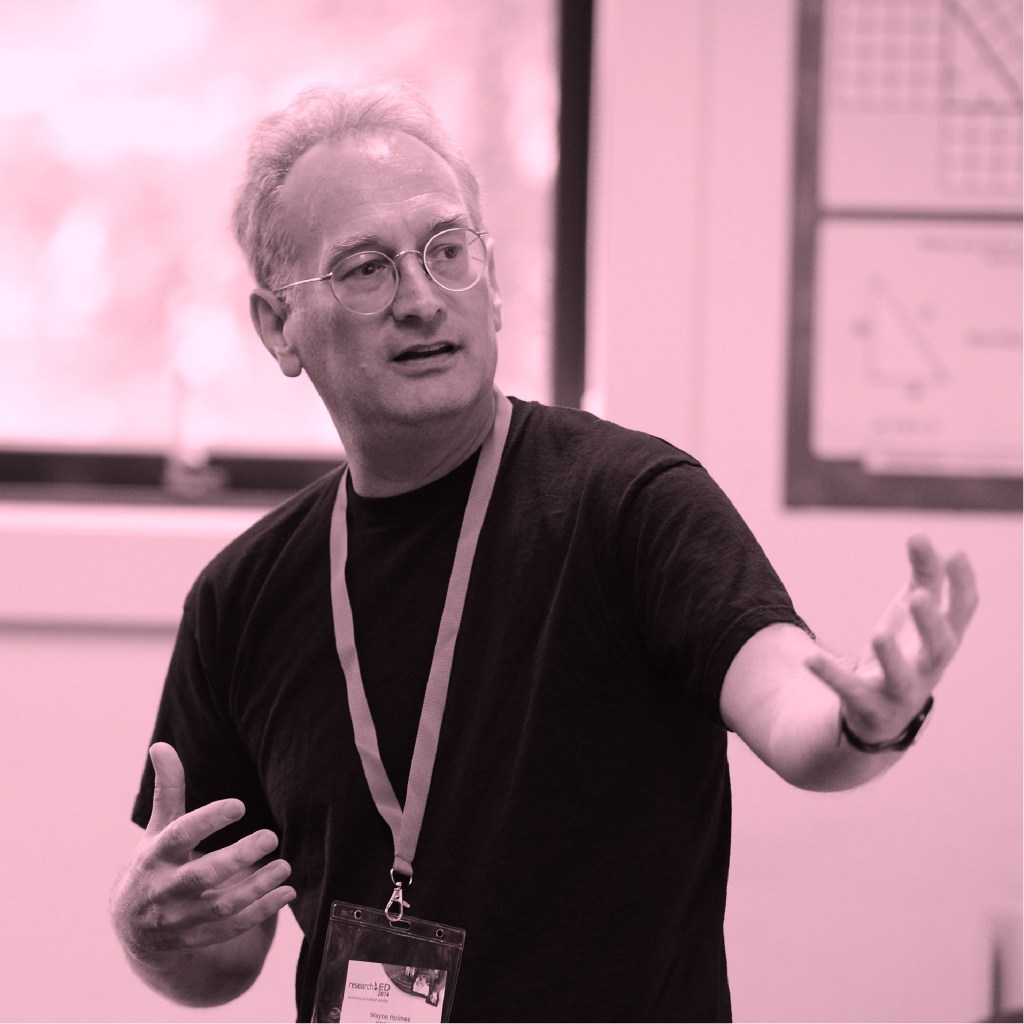
Wayne Holmes
UK
Wayne Holmes (PhD, University of Oxford) is an Associate Professor in the UCL Knowledge Lab at University College London. His research takes a critical studies perspective to the teaching and application of Artificial Intelligence in educational contexts (AI&ED), and their ethical, human, and social justice implications.
Wayne is leading the Council of Europe’s project: Artificial Intelligence and Education. A critical view through the Lens of Human Rights, Democracy and the Rule of Law; he is also Consultant for the Technology and AI in Education unit at UNESCO, for which he co-wrote AI and Education: Guidance for Policy-makers; and he is Senior Researcher in AI&ED for IRCAI (the International Research Centre on Artificial Intelligence under the auspices of UNESCO).
Wayne has also co-written Artificial Intelligence in Education. Promise and Implications for Teaching and Learning (Holmes et al., 2019),Citizens Interacting with AI Systems(for the EU JRC, Vuorikari and Holmes, 2022),State of the Art and Practice in AI in Education (Holmes and Tuomi, 2022), and The Ethics of AI in Education. Practices, Challenges and Debates (Holmes and Porayska-Pomsta, Eds, 2022).
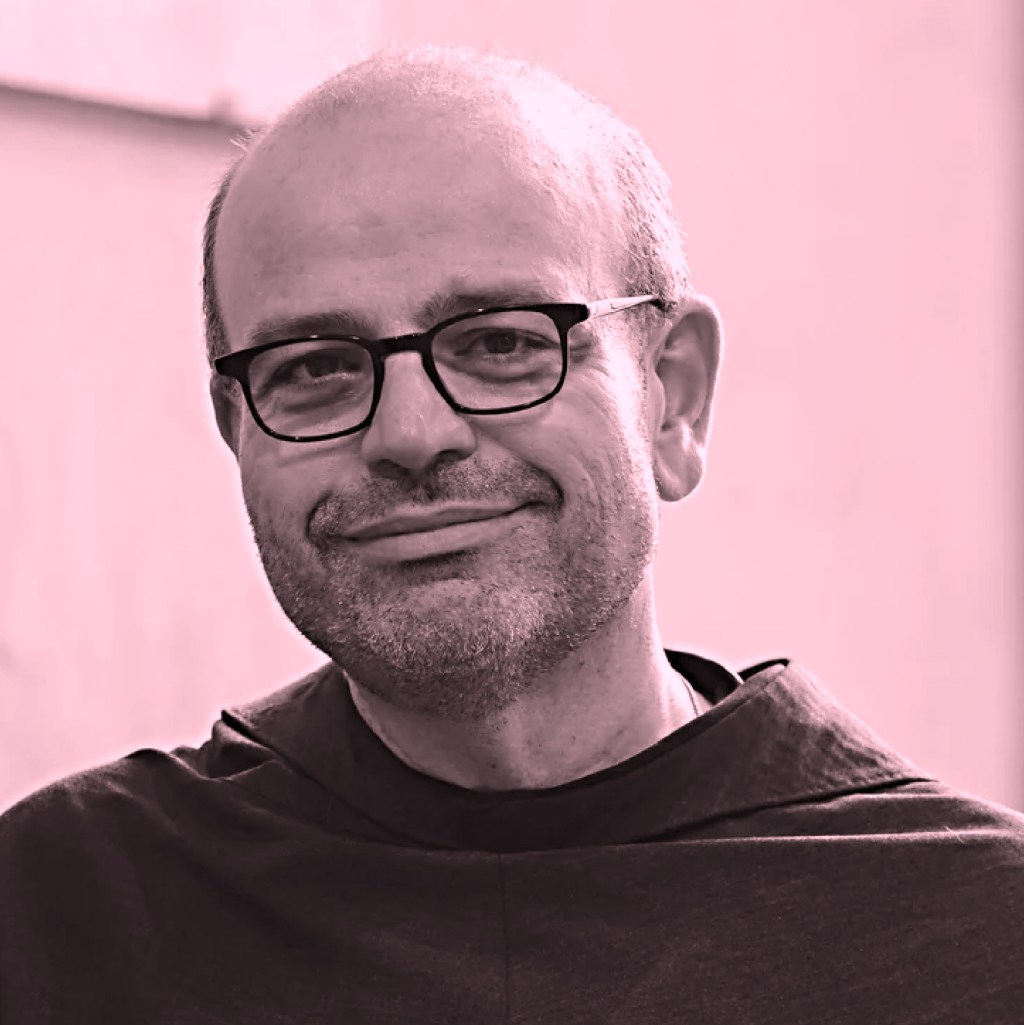
Paolo Benanti, OFM
Rome, Italy
Nació en Roma en 1973. Es sacerdote franciscano de la Tercera Orden de San Francisco (TOR), un especialista de ética, bioética y ética de las tecnologías. En específico sus estudios se focalizan en la gestión de la innovación: internet y el impacto de la Era Digital, las biotecnologías para el mejoramiento humano y la bioseguridad, las neurociencias y las neuro tecnologías.
Como el mismo escribe: “trato de que el significado ético y antropológico de la tecnología tenga los bordes bien definidos para el Homo sapiens: somos una especie que desde hace 70 mil años habita el mundo transformándolo. La condición humana es una condición tecno-humana…”
En 2008 obtiene su título universitario por la Pontificia Universidad Gregoriana. En 2012 obtiene el título de Doctor en Tecnología Moral y es acreedor del premio Berlamino Vedovato por la mejor tesis doctoral y la mejor disertación presentada con el título: The Cyborg. Cuerpo y corporaciones en la época de lo post-humano.
Desde 2008 es docente en la Pontificia Universidad Gregoriana, en el Instituto Tecnológico de Asís y el Pontificio Colegio Leoniano en Anagni (Sur de Lacio).
Además de los cursos institucionales sobre moral sexual y bioética se dedica a la neuroética, ética de las tecnologías, inteligencia artificial y post-humano. Formó parte del Grupo Especial de Inteligencia Artificial para coadyuvar la Agencia para Italia Digital. Es miembro de la Pontificia Academia por la vida con un especial mandato para el mundo de las inteligencias artificiales. A finales de 2018 fue seleccionado por la Secretaría de Desarrollo Económico como miembro del grupo de los treinta expertos, que a nivel nacional tienen la tarea de elaborar la estrategia nacional sobre la inteligencia artificial y la estrategia nacional en materia de tecnologías basadas en registros y en tecnología blockchain.
Some papers, news, projects and interviews
Human in the loop. Decisioni umane e intelligenze artificiali, Mondadori Università, Milano, 2022
La grande invenzione. Il linguaggio come tecnologia, dalle pitture rupestri al GPT-3, San Paolo, Cinisello Balsamo, 2021
Digital Age. Teoria del cambio d’epoca. Persona, famiglia e società, San Paolo, Cinisello Balsamo, 2020
Oráculos: entre ética e governança dos algoritmos, Editora Unisinos, 2020
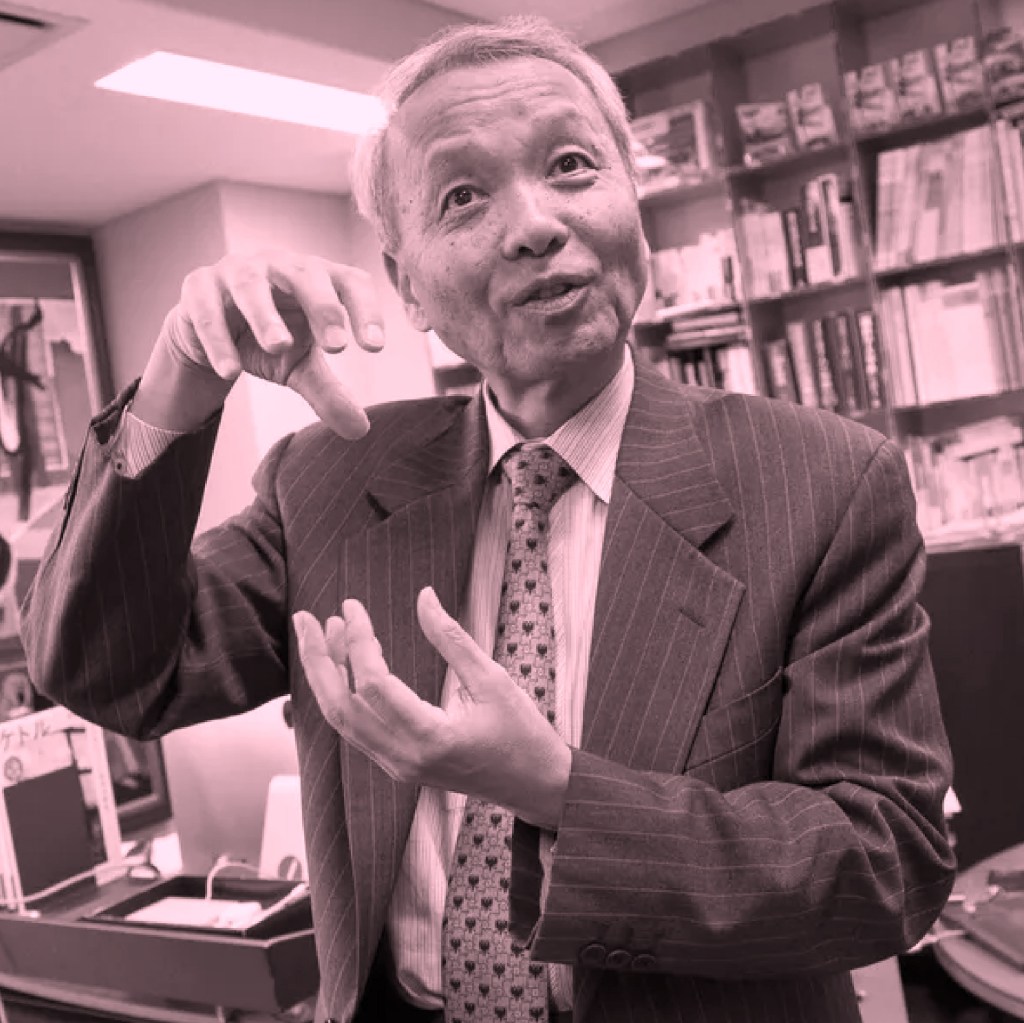
Minoru Asada
Tokyo, Japan
Minoru Asada received the B.E., M.E., and Ph.D. degrees in control engineering from Osaka University, Suita, Japan, in 1977, 1979, and 1982, respectively. He became a Full Professor of Mechanical Engineering for Computer-Controlled Machinery with Osaka University, in 1995, and was a Professor with the Department of Adaptive Machine Systems, Osaka University during 1997-2018.
Since 2019, he has been a specially-appointed professor as a strategic adviser for the Symbiotic Intelligent System Research Center Open and Transdisciplinary Research Initiatives, Osaka University. In April, 2021, he became a vice president of International Professional University of Technology in Osaka (keeping the position at Osaka University).
He was the Research Director of the Japan Science and Technology Agency Exploratory Research for Advanced Technology ASADA Synergistic Intelligence Project during 2005 and 2012. In 2012, the Japan Society for Promotion of Science named him to serve as the Research Leader for the Specially Promoted Research Project (Tokusui) on Constructive Developmental Science Based on Understanding the Process From Neuro-Dynamics to Social Interaction.
He was a PI for JST RISTEX HITE project entitled “Legal Beings: Electronic personhoods of artificial intelligence and robots in NAJIMI society, based on a reconsideration of the concept of autonomy” (2017-2021), and a PI for Neuromorphic Dynamics Project (NEDO: 2018-2022).
Some papers, news, projects and interviews
Mirror Neuron System:
Child Android:
Soft tactile sensor:
Edmond Awad
UK
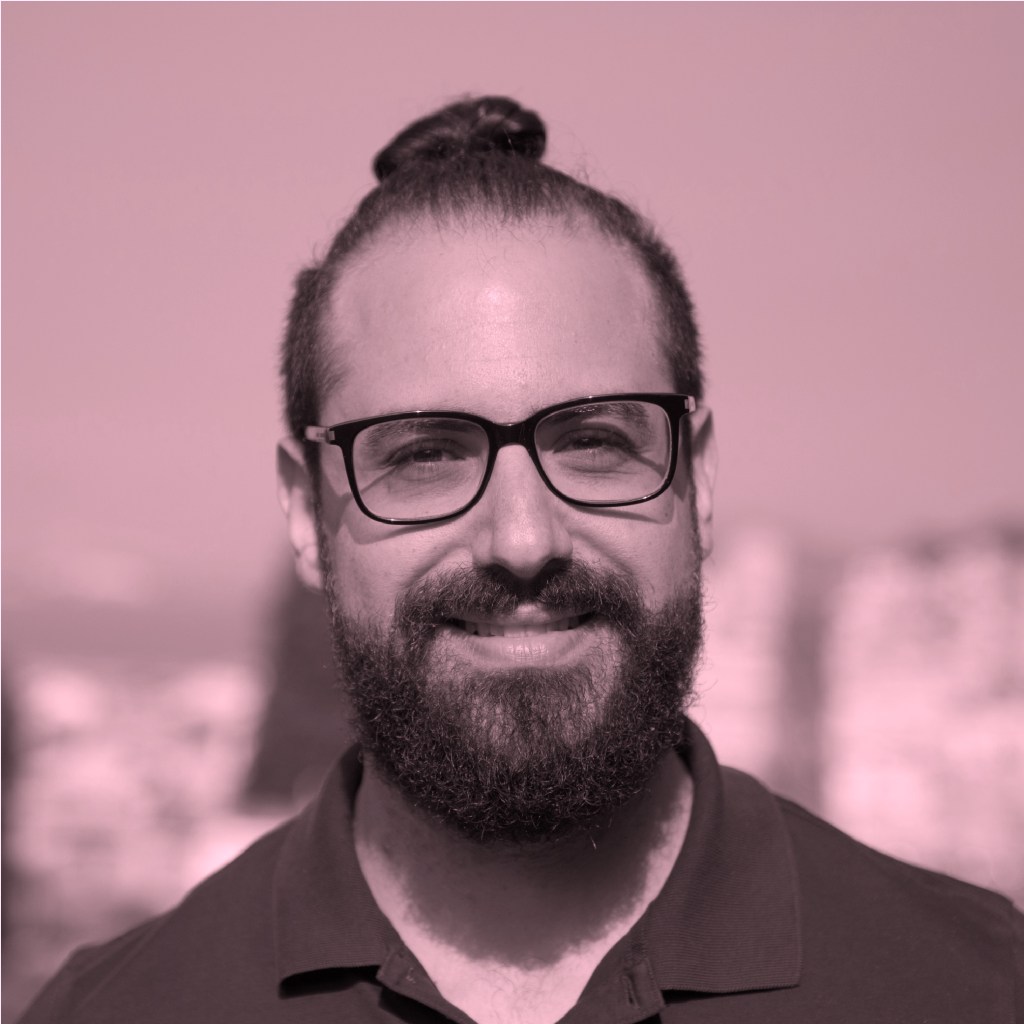
Edmond Awad is a Senior Lecturer (Assistant Professor) in the Department of Economics and the Institute for Data Science and Artificial Intelligence at the University of Exeter. He is also an Associate Research Scientist at the Max Planck Institute for Human Development, a Turing Fellow at the Alan Turing Institute, and a Founding Editorial Board member of the AI and Ethics Journal (Springer Nature). Before joining the University of Exeter, Edmond was a Postdoctoral Associate at MITMedia Lab (2017-2019). In 2016, Edmond led the design and development of Moral Machine, a website that gathers human decisions on moral dilemmas faced by driverless cars. The website has been visited by over 8 million users, who contributed their judgements on 100 million dilemmas. Another website that Edmond co-created, called MyGoodness, collected judgements over 3 million charity dilemmas. Edmond’s work appeared in major academic journals, including Nature, PNAS, and Nature Human Behaviour, and it has been covered in major media outlets including The Associated Press, The New York Times, The Washington Post, Der Spiegel, Le Monde and El Pais. Edmond has a bachelor degree (2007) in Informatics Engineering from Tishreen University (Syria), a master’s degree (2011) in Computing and Information Science and a PhD (2015) in Interdisciplinary Engineering from Masdar Institute (now Khalifa University; UAE), and a master’s degree (2017) in Media Arts and Sciences from MIT. Edmond’s research interests are in the areas of AI, Ethics, Computational Social Science and Multi-agent Systems.
Some papers, news, projects and interviews
Edmond Awad, Sohan Dsouza, Richard Kim, Jonathan Schulz, Joseph Henrich, Azim Shariff, Jean-François Bonnefon and Iyad Rahwan (2018). The Moral Machine experiment. Nature (59— 65). 563 (7729).
Edmond Awad, Sohan Dsouza, Azim Shariff, Iyad Rahwan, and Jean-François Bonnefon (2020). Universals and variations in moral decisions made in 42 countries by 70,000 participants.Proceedings of the National Academy of Sciences (PNAS)(2332—2337).117(5).
Edmond Awad*, Sydney Levine*, Michael Anderson, Susan Leigh Anderson, Vincent Conitzer, M. J. Crockett, Jim A.C. Everett, Theodoros Evgeniou, Alison Gopnik, Julian C. Jamison, Tae Wan Kim, S. Matthew Liao, Michelle N. Meyer, John Mikhail, Kweku Opoku-Agyemang, Jana Schaich Borg, Juliana Schroeder, Walter Sinnott-Armstrong, Marija Slavkovik, Josh B. Tenenbaum (2022). Computational Ethics. Trends in Cognitive Sciences, 26 (5), 388-405
Edmond Awad, Sohan Dsouza, Azim Shariff, Jean-François Bonnefon and Iyad Rahwan (2020). Crowdsourcing Moral Machines. Communications of the ACM (48—55). 63(3). [open access][Video: CACM].
Edmond Awad*, Sydney Levine*, Max Kleiman-Weiner, Sohan Dsouza, Josh B. Tenenbaum, Azim Shariff, Jean-François Bonnefon, Iyad Rahwan (2019). Drivers are blamed more than their automated cars when both make mistakes. Nature Human Behaviour. 3 (10).
Richard Kim, Max Kleiman-Weiner, Andres Abeliuk, Edmond Awad, Sohan Dsouza, Josh B. Tenenbaum, and Iyad Rahwan (2018). A Computational Model of Commonsense Moral Decision Making. Proceedings of the 2018 AAAI/ACM Conference on AI, Ethics, and Society (AIES) conference (197—203). ACM.
Ritesh Noothigattu, Snehalkumar ‘Neil’ S. Gaikwad, Edmond Awad, Sohan Dsouza, Iyad Rahwan, Pradeep Ravikumar, Ariel D. Procaccia (2018). A Voting-based System for Ethical Decision Making. Proceedings of the 2018 Autonomous Agents and Artificial Intelligence (AAAI) conference (1587—1594). [arXiv pre-print]
Edmond Awad, Bence Bago, Jean-François Bonnefon, Nicholas A. Christakis, Iyad Rahwan, Azim Shariff (2022).Polarized citizen preferences for the ethical allocation of scarce medical resources in twenty countries. Medical Decision Making (MDM) Policy & Practice, 7(2), 23814683221113573 [data and code]
Jim A. C. Everett*, Clara Colombatto*, Edmond Awad, Paulo Boggio, Björn Bos, William J. Brady, Megha Chawla, Vladimir Chituc, Dongil Chung, Moritz A. Drupp, Srishti Goel, Brit Grosskopf, Frederik Hjorth, Alissa Ji, Caleb Kealoha, Judy S. Kim, Yangfei Lin, Yina Ma, Michel André Maréchal, Federico Mancinelli, Christoph Mathys, Asmus L. Olsen, Graeme Pearce, Annayah M. B. Prosser, Niv Reggev, Nicholas Sabin, Julien Senn, Yeon Soon Shin, Walter Sinnott-Armstrong, Hallgeir Sjåstad, Madelijn Strick, Sunhae Sul, Lars Tummers, Monique Turner, Hongbo Yu, Yoonseo Zoh & Molly J. Crockett (2021). Moral dilemmas and trust in leaders during a global health crisis. Nature Human Behaviour, 5(8), 1074-1088.
 INTELIGENCIA ARTIFICIAL